



- Understand Your Country’s Import Regulations
- Choose the Right Vehicle
- Access Japanese Auto Auctions or Dealers
- Verify Vehicle Condition and History
- Calculate the Total Import Cost
- Secure the Vehicle and Make Payment
- Prepare Export Documentation
- Shipping the Vehicle
- Customs Clearance in Your Country
- Vehicle Registration and Final Steps
Understand Your Country’s Import Regulations
Each country has its own rules on age limits, emissions, steering side, and taxes. For example, South Africa restricts imports to returning residents/permanent residents with permits; only right-hand-drive vehicles are generally allowed. Tanzania has effectively an 8-year age rule (older cars face steep excise duties) and requires a pre-shipment inspection (JEVIC).
Zambia imposes no hard age limit but adds a 20% surtax on vehicles over 5 years old; only RHD cars are permitted. Kenya forbids imports older than 8 years and bans standard left-hand-drive vehicles. In Uganda, there is currently no age restriction, and both LHD and RHD cars are allowed. By contrast, the UK imposes no age limit and permits either LHD or RHD vehicles.
New Zealand requires any imported car to meet strict safety and emissions standards (e.g., the NZTA’s Clean Car Programme). Australia enforces Australian Design Rules compliance for all imports and generally only licenses right-hand-drive models. In all cases, prospective buyers should check local regulations on age, emissions, steering position, and legal eligibility (e.g., special schemes for vintage or returning-resident vehicles).
Choose the Right Vehicle
Decide on your budget, preferred model, fuel type, and vehicle size. Think about parts availability and maintenance in your country. For African markets (e.g. South Africa, Tanzania, Zambia, Kenya, Uganda), durable SUVs or pickups (like Toyota Land Cruiser, Hilux, Nissan Patrol) are popular due to off-road conditions and easily sourced spare parts. In New Zealand, UK or Australia, compact cars or sedans with good fuel economy are common choices.
Define how you’ll use the car (commuting, business, or leisure) and select accordingly. Remember that a well-maintained used Japanese car can be very reliable, but check that replacement parts are affordable and local mechanics are familiar with the model.
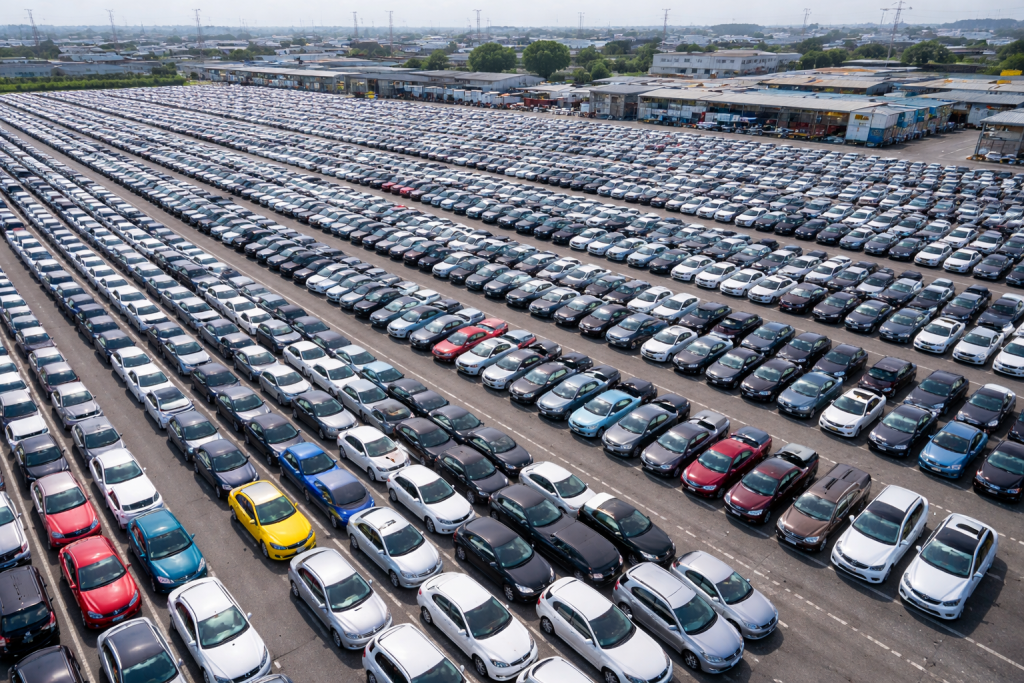
- Set your budget (vehicle cost plus import fees) and stick to it.
- Preferred models: Toyota, Nissan, Honda, Subaru, etc., which have strong resale and service networks worldwide.
- Mileage and age: Newer cars (e.g., <5–8 years old) usually have fewer mechanical issues and may avoid extra taxes (since some countries levy surtaxes on older cars).
- Fuel type: Diesel vs petrol vs hybrid, depending on fuel prices and usage in your country.
- Right-hand drive: If your country drives on the left (e.g., UK, NZ, Australia, Kenya, Uganda), ensure the car is right-hand drive. (Countries like South Africa and Kenya ban standard left-hand-drive imports.)
Keeping these factors in mind will help you shortlist vehicles that suit your needs and comply with local laws.
Access Japanese Auto Auctions or Dealers
To buy from Japan, you can bid directly on Japanese auto auction platforms or use a licensed exporter/dealer. Registered exporters can register you on auction sites and act on your behalf. When browsing auctions, review each car’s auction sheet: it shows the vehicle’s details (mileage, damage history, condition grades) in English.
Focus on listings with high condition grades (A or 4+) and clear descriptions. You can also search dealer inventories labeled “used cars Japan auction” or “export” to find options. If you’re not familiar with auctions, work with a reputable Japanese exporter or broker. They will help with bidding, currency exchange, and can even guarantee the auction sheet accuracy. Always verify the dealer’s credentials and reviews before proceeding.
Verify Vehicle Condition and History
Don’t skip this critical step. Carefully inspect the auction sheet and photos: note the odometer reading, any history of accidents or repairs, rust or frame damage (often marked on the sheet). If needed, request additional photos or an independent third-party inspection (e.g., JEVIC or Bureau Veritas inspection).
For cars with suspicious mileage or history, be cautious. An inspection certificate from JEVIC (Japan Export Vehicle Inspection Center) adds confidence that the vehicle passed a quality check. Keep records of all documents (auction sheet, inspection reports, maintenance records) for your peace of mind and for customs when they may check authenticity.
Calculate the Total Import Cost
When budgeting, include all costs beyond the purchase price:
- Vehicle price (auction or dealer fee).
- Japanese fees: Auction fee, documentation fee, inland transport to port, and export clearance.
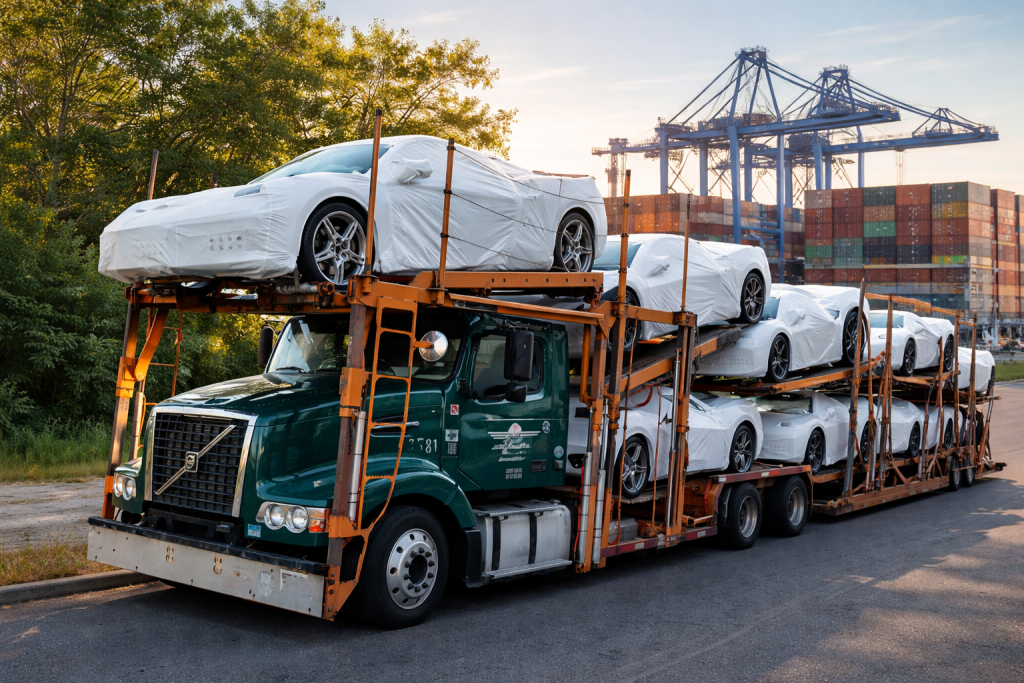
- Shipping: Choose RoRo (roll-on/roll-off) or container. RoRo is cheaper for standard cars; containers are costlier but protect the vehicle. (For example, RoRo shipments to East Africa typically take ~25–35 days.)
- Insurance: Marine cargo insurance for loss/damage in transit.
- Customs duties and taxes: Each country has its own rates. For instance, in Tanzania, import duty is ~25%, plus VAT ~20% (roughly 50–65% total of the car’s CIF value, depending on engine size). Kenya levies 25% duty, 20–25% excise (varying by cc), and 16% VAT, plus small levies (IDF 3.5%, RDC 2%). Uganda charges 15% duty, 17% VAT, plus 2% commission and 6% withholding tax. The UK generally charges 10% duty plus 20% VAT (post-Brexit) on non-EU cars.
- Import agent and clearance fees: Any local customs broker or port handling charges.
- Registration and compliance costs: Local registration fee, insurance, and any technical inspection (e.g. MOT in the UK, roadworthy in Kenya).
Compute the total landed cost (vehicle price + all of the above) before bidding. Many exporters can provide a breakdown if you ask, often called a proforma invoice. This step ensures no surprises later.
Secure the Vehicle and Make Payment
After winning the auction bid or finalizing the purchase with a dealer, the exporter will prepare a sales contract or invoice. Review all terms (payment due date, cancellation policy, and included services). Typically, you’ll pay an initial deposit (often 10–30%) to reserve the car. Once the seller confirms receipt, pay the balance by the agreed method (bank transfer or escrow services are common).
Keep proof of payment and ensure the exporter provides the signed bill of sale and invoice with full vehicle details. Only transfer the funds as per the contract; avoid paying too early for unverified deals. A trustworthy exporter will guide you through each step and provide all necessary receipts.
Prepare Export Documentation
Your exporter will handle or provide key documents needed for shipping and customs:
- Bill of Lading (BOL): Issued by the shipping line after loading; details vessel, voyage, and cargo.
- Export Certificate: Japan’s Ministry of Transport certificate (demonstrates deregistration in Japan).
- Commercial Invoice: Itemizes vehicle price and buyer/seller info.
- Vehicle Registration (Logbook): The Japanese logbook or registration card (the original).
- Inspection Certificate (e.g. JEVIC): If applicable, shows the vehicle passed Japan’s export inspection.
- Power of Attorney: Sometimes required if an agent clears customs on your behalf.
Keep copies of all documents. You’ll need them for customs clearance at your port and for final registration of the vehicle. Your exporter may email scanned copies in advance, but always collect originals from them.
Shipping the Vehicle
Arrange shipment via Roll-on/Roll-off (RoRo) or container:

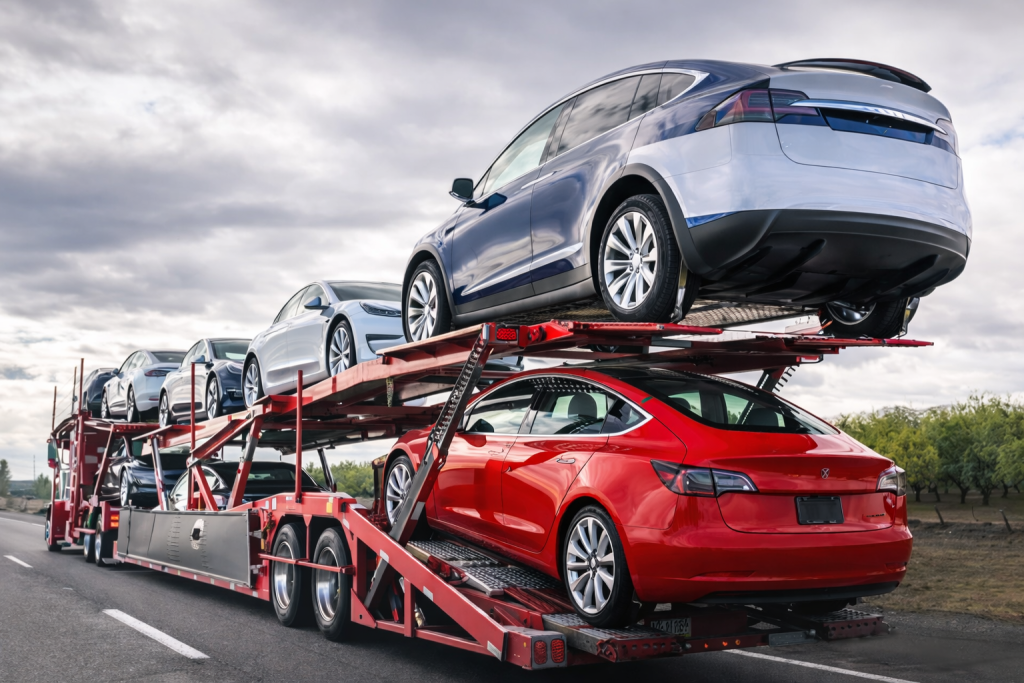
- RoRo: Cheaper and common for regular cars. Vehicles are driven onto the vessel at port. Typical transit times: e.g. 4–6 weeks from Japan to East Africa (Dar es Salaam or Mombasa), or ~25 days to the UK.
- Container: More expensive, but protects the car from weather/theft. Good for luxury vehicles or if you’re also shipping personal effects.
- Booking and loading: Your exporter or freight forwarder will book a slot. They’ll deliver the car to the Japanese port (often Yokohama, Nagoya, or Osaka) and load it onto the ship.
Note the port of arrival: e.g., Dar es Salaam (Tanzania) or Mombasa (Kenya) for East African imports, Durban (South Africa) for Southern Africa, Southampton/Liverpool (UK), Auckland (NZ), or Brisbane (Australia), depending on destination. Shipping schedules vary, so plan accordingly and ask for an estimated arrival date. After departure, you’ll receive a Bill of Lading with the vessel’s ETA.
Customs Clearance in Your Country
Once the vehicle arrives, start the clearance process:
- Hire a customs broker/agent: This is often required. They’ll submit your documents and duties in the customs system.
- Submit documents: Provide originals of invoice, BOL, export certificate, logbook, and any import license. Some countries (like Kenya) also require a Foreign Exchange Declaration or National Transport & Safety Authority (NTSA) approval.
- Pay duties and taxes: Customs will calculate based on CIF value. For example, Kenya requires 25% import duty on CIF plus 20–25% excise and 16% VAT. Tanzania charges 25% duty and 20% VAT (and excise on engines >2000cc). Make payments as invoiced by customs.
- Inspection: Many countries mandate a post-arrival inspection. Kenya inspects vehicles for roadworthiness, emissions, and verifying VIN; Uganda requires a JEVIC roadworthiness check. Coordinate with your agent or relevant authority for this.
- Release of vehicle: Once all duties are paid and inspections passed, customs will issue a release order. You can then take possession of the car or arrange inland transport to your home address.
Vehicle Registration and Final Steps
Finally, register and license the vehicle locally:
- Registration: Submit the customs release docs, proof of ownership (bill of sale, original logbook), and identity documents to your transport authority. In the UK, you would apply to the DVLA; in Kenya the NTSA; in Tanzania the TBS; in NZ the NZTA; in Australia the local RTA; etc. You’ll also need to pay the first registration fee/tax (some countries call this “motor vehicle tax”).
- Technical compliance: Depending on the country, you may need an official inspection or certificate of compliance. For example, the UK requires an IVA test (unless the car is >10 years old, and then only an MOT is needed). Tanzania and Uganda already handled inspections; Australia may require ADR compliance proof if not on the RAV list.
- License plates and insurance: Obtain license plates and local insurance. Do not drive the car on public roads without proper plates.
- Enjoy your vehicle: With registration and insurance done, you can legally drive your Japanese import. Keep all import paperwork in case of future resale or audits.
Following these steps carefully—while staying aware of country-specific rules—will help ensure a smooth import process from an auction or dealer in Japan all the way to driving your car at home. Good luck with your import!


